
Back to All Engineering Insights
Laboratory Diagnostics
Published 2026-08-22
•11 min read
Finding the Right Laboratory Microscope in Kenya: Entry-Level vs. Premium Olympus Systems
Authored by Medwise Biomedical Advisory Team
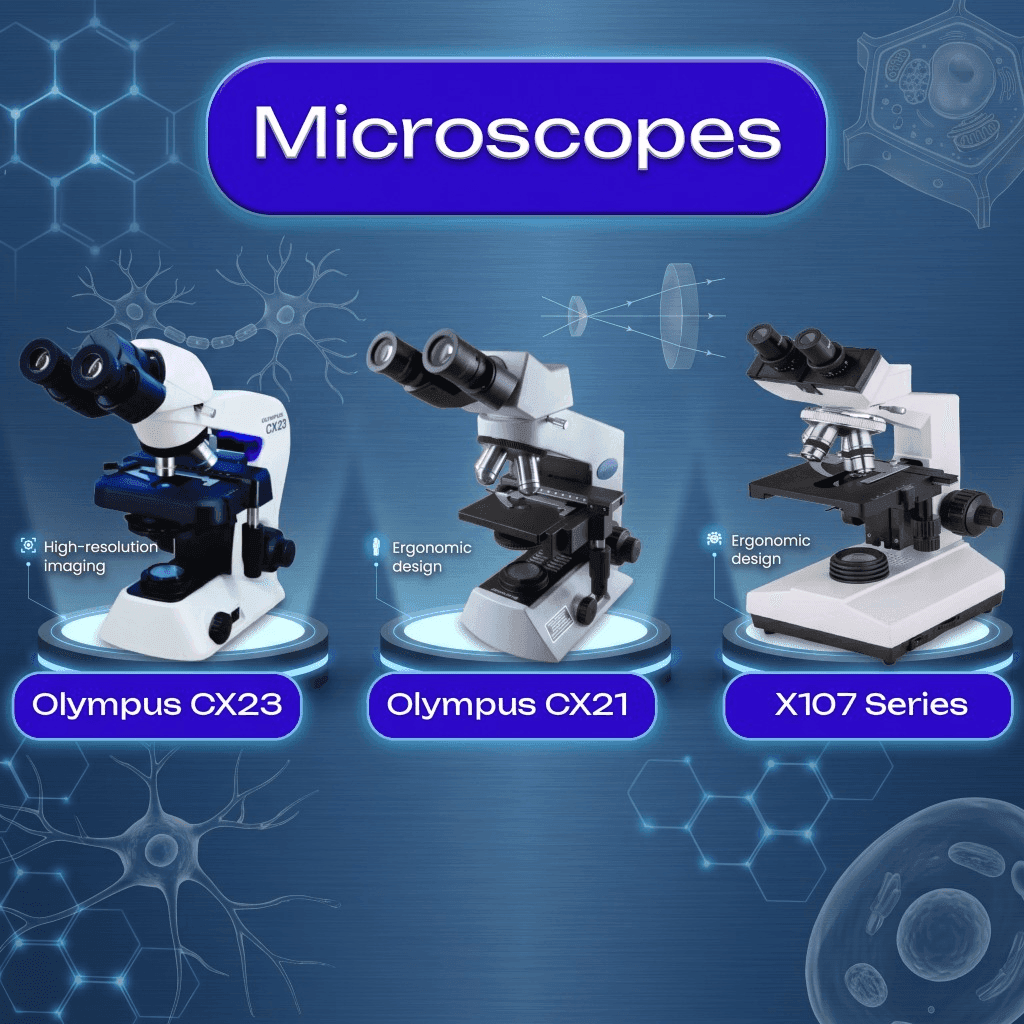
Technical Overview: Click image to expand high-resolution view
Are you setting up a new medical clinic, upgrading a secondary school or college science lab, or expanding a diagnostic healthcare facility in Kenya? A reliable laboratory microscope is the undisputed backbone of your everyday clinical and diagnostic operations.
From diagnosing malaria parasites in whole blood films to identifying urinary sediments, stool ova, and Gram-stained bacteria, an accurate optical image directly informs clinical decision-making. However, investing in the wrong microscope model can lead to devastating practical challenges: poor optical resolution, chronic chromatic aberration, frequent bulb blowouts, optical fungal degradation, and fragile mechanical focus gear stripping.
At Medwise Technical Consulting, we assist healthcare directors, laboratory superintendents, and school bursars across Kenya in balancing pristine optical performance with realistic capital budgets. In this comprehensive technical guide, we break down the two most popular clinical microscope categories in Kenya: Entry-Level Starter Models (X107, Omega 7, basic TE) and Premium Clinical Diagnostic Systems (Olympus CX21 and Olympus CX23).
Overview: If you are establishing an entry-level outpatient clinic, a rural dispensary (zahanati), a maternity nursing home, or a secondary school biology laboratory, starter binocular and monocular microscopes offer essential diagnostic functionality at an accessible price point.
Standard Optical Path & Mechanical Architecture
Illumination Light Source / LED
Focusing Abbe Condenser N.A. 1.25
Platform 96mm Mechanical Stage
Magnification Achromatic Objectives
Observation 10x Eyepieces
Designed as simple, dependable workhorses for routine primary screening. They handle standard high-volume outpatient tests where extreme optical magnification resolution is not required, such as routine urinalysis, stool examination for intestinal parasites (Ova & Parasites), simple wet mounts, and basic student training.
Popular Models in Kenya: X107 Series, Omega 7 Series, and basic TE Models.
Biomedical Advisory & Engineering StandardEstimated Price Range in Kenya: KES 22,000 – KES 30,000 (Standard binocular configuration including dust cover, immersion oil, and blue filter).
Overview: For busy county referral hospitals (Level 4 and Level 5), commercial reference diagnostic centers, specialized microbiology units, and research institutions, optical clarity and all-day mechanical durability are non-negotiable.
The global benchmark in this tier is the Olympus CX Series—specifically the legendary Olympus CX21 and its modern successor, the Olympus CX23.
Olympus CX Series Premium Optical Architecture
Light Engine High-Luminance LED (20,000h)
Flat-Field Optics Plan Achromatic Optics (FN 20)
Ergonomic Base Rackless Stage Platform
Tropicalized Anti-Fungal Sealed Head
Built for rigorous, all-day diagnostic workflows where accurate identification of microscopic parasites (e.g., Plasmodium falciparum ring forms, Trypanosoma, microfilariae), cellular casts, malignant cytology, and acid-fast bacilli (AFB) depends on pristine optical definition.
Popular Models in Kenya: Olympus CX21 (Halogen) and Olympus CX23 (Integrated LED).
Biomedical Advisory & Engineering StandardEstimated Price Range in Kenya: KES 120,000 – KES 170,000 (Brand-new genuine unit with factory warranty, calibration certificate, and manufacturer accessories).
| Feature / Specification | Starter & Budget Tier (X107 / Omega 7) | Premium Diagnostic Tier (Olympus CX21 / CX23) |
|---|---|---|
| Optical Quality | Standard Achromatic (Center focused) | Plan Achromat (100% Flat edge-to-edge clarity) |
| Field of View (FN) | FN 18 mm | FN 20 mm (Wider scanning field) |
| Anti-Fungal Protection | Basic or None (Requires dry storage) | Factory-Sealed Anti-Fungus Optical Coating |
| Illumination Source | 6V/20W Halogen or Basic LED (1,000 – 2,000 hrs) | 0.5W Daylight LED (20,000+ hrs life) / 6V 20W Halogen |
| Mechanical Stage Design | Standard Dual-Layer Stage with protruding rack | Wire-driven Rackless Stage (Smooth & injury-free) |
| Focusing Mechanism | Coaxial Coarse/Fine with synthetic gears | High-Precision Brass Coaxial Gears + Torque Lock |
| Daily Workload Capacity | 1 – 20 routine samples / day | 50 – 150+ heavy diagnostic samples / day |
| Price in Kenya (KES) | KES 22,000 – KES 30,000 | KES 120,000 – KES 170,000 |
| Recommended Target Tier | Zahanati, Dispensaries, Secondary Schools, Outpatient Startups | Level 4/5 Hospitals, Diagnostic Centers, Universities, Reference Labs |
A clinical microscope is deployed across several critical diagnostic benches. Choosing the right optical tier ensures your technologist can reliably identify key pathology:
| Diagnostic Bench Discipline | Key Pathology & Smear Types | Optical Requirements in Kenya |
|---|---|---|
| 1. Parasitology | • Giemsa thick/thin blood smears for Plasmodium falciparum malaria | 100x Oil immersion with high numerical aperture (N.A. 1.25) Abbe condenser and iris diaphragm. |
| 2. Microbiology | • Gram staining (Gram-positive vs. Gram-negative bacteria) | Plan Achromat optics (Olympus CX tier) eliminate color fringing and chromatic aberration on stained bacteria. |
| 3. Urinalysis & Body Fluids | • Urinary sediments (hyaline/granular casts, calcium oxalate crystals, RBCs/WBCs) | 10x and 40x dry objectives with fine contrast adjustment and coaxial focus tension control. |
| 4. Manual Hematology | • Manual WBC differential counts (neutrophils, bands, blasts) | Flat field of view (FN 20 mm) across the full scanning area to review peripheral blood films efficiently. |
| 5. Cytology & Semen Analysis | • Pap smears and fine-needle aspirate cytology (FNAC) | Consistent daylight LED illumination (CX23) to eliminate specimen thermal heating during live sperm motility observation. |
Microscopes are precision optical-mechanical instruments. In Kenya's varied climatic zones, proper preventive maintenance preserves your optical investment:
Biomedical Advisory & Engineering Standard[!WARNING] Beware of refurbished or counterfeit microscopes bearing unofficial "Olympus" branding stickers on low-grade cast frames. Authentic Olympus microscopes feature laser-engraved serial numbers, official distributor certification, and heavy, precision-machined mechanics. Always purchase from accredited biomedical engineering partners.
Don't gamble on unverified suppliers or gray-market equipment. At Medwise Technical Consulting, we help Kenyan medical facilities and educational institutions procure authentic, certified laboratory equipment with complete after-sales backing:
Medwise Technical Consulting provides brand-neutral equipment selection, procurement, installation, and precision calibration across Kenya. Speak directly with our practicing biomedical team today.

Independent advisory. Transparent flat-rate pricing. 100% clinical compliance.