
Back to All Engineering Insights
Laboratory Diagnostics
Published 2026-08-18
•7 min read
Automated Hematology Analyzer for Sale in Kenya: 3-Part vs 5-Part Complete Buying & Technical Guide
Authored by Medwise Biomedical Advisory Team
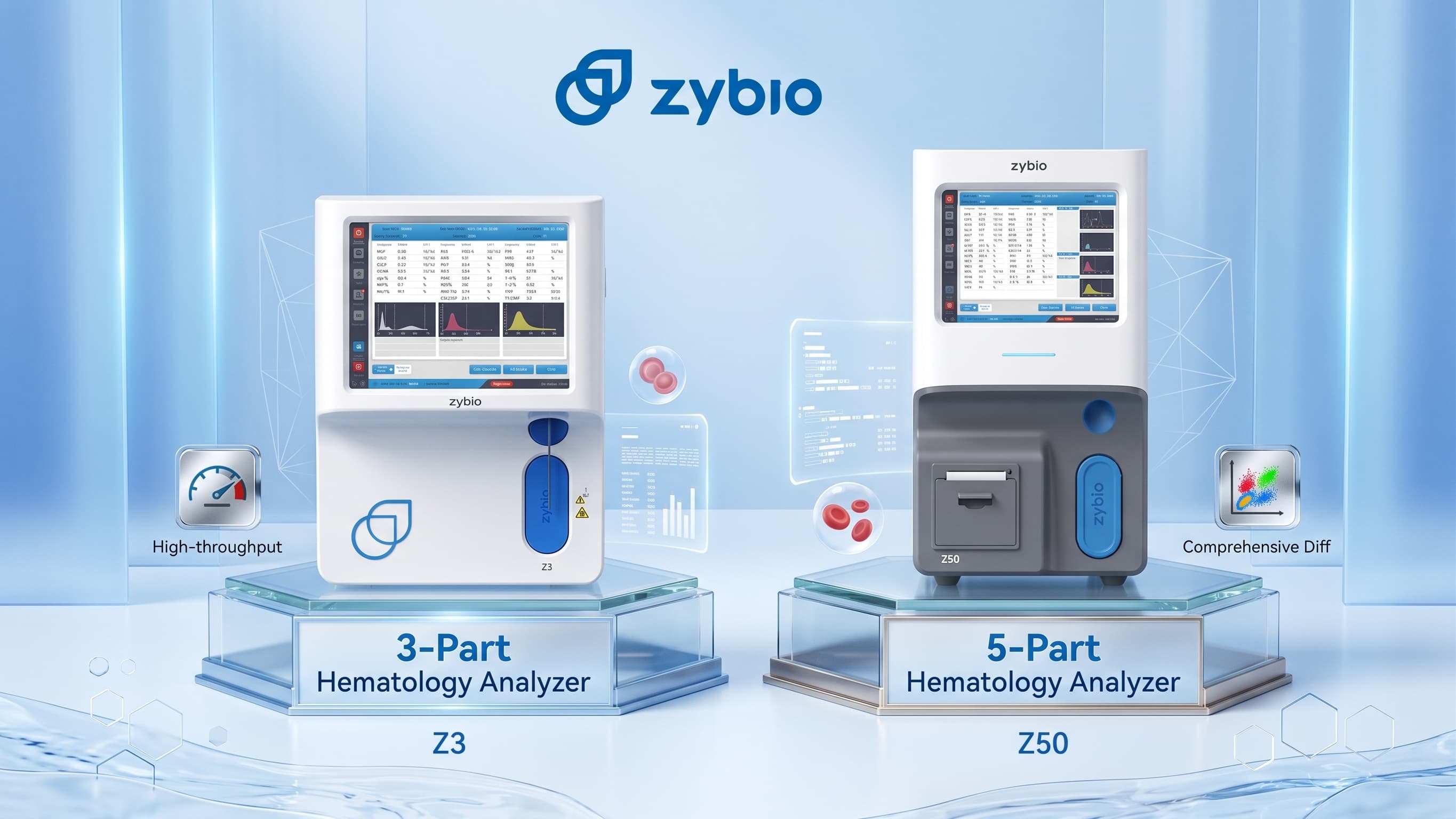
Technical Overview: Click image to expand high-resolution view
Complete Blood Count (CBC) analysis is the single most frequently requested diagnostic test across medical clinics, district hospitals, and commercial laboratories in Kenya. From screening for malaria and anemia to detecting severe bacterial infections and leukemia, a reliable automated hematology analyzer (CBC machine) is the bedrock of modern clinical decision-making.
However, selecting a hematology analyzer for sale in Kenya involves navigating complex engineering specifications, operating costs, regulatory approvals, and after-sales maintenance support. Investing in the wrong cell counter can lead to high reagent waste, frequent tube blockages, uncalibrated parameter drift, and costly downtime.
In this definitive 2026 technical guide, the biomedical engineering team at Medwise Technical Consulting provides a complete buyer’s breakdown to help facility managers, medical directors, and laboratory technologists source the right hematology system for their clinical volume and budget.
Modern automated cell counters rely on two primary detection principles to measure and differentiate blood cells in whole blood samples:
The Coulter Principle remains the foundation of red blood cell (RBC) and platelet (PLT) counting. Blood cells are suspended in an isotonic diluent and drawn through a micro-aperture placed between two electrodes. Because blood cells act as non-conductive particles, passing through the aperture creates a momentary increase in electrical resistance (impedance).
For advanced 5-part leukocyte differentiation, high-end analyzers combine impedance with semiconductor laser flow cytometry and fluorescent staining:
Automated Cell Counting & Differentiation Workflow
Phase 1 Sample Aspiration
Phase 2 Lyse & Diluent Reaction
Phase 3 Impedance / Laser Flow Cell
Phase 4 3D Scattergram & Histograms
When searching for a hematology analyzer for sale in Kenya, the primary structural decision is choosing between a 3-part differential machine and a 5-part differential machine.
| Feature / Metric | 3-Part Differential Hematology Analyzer | 5-Part Differential Hematology Analyzer |
|---|---|---|
| Leukocyte Subpopulations | 3 Groups: Granulocytes, Lymphocytes, Mid-cells (Monocytes/Eosinophils/Basophils) | 5 Groups: Neutrophils, Lymphocytes, Monocytes, Eosinophils, Basophils |
| Detection Method | Electrical Impedance + Cyanide-Free Hemoglobin Photometry | Laser Flow Cytometry + Electrical Impedance + Fluorescence |
| Sample Aspiration Volume | Micro-sampling (9 µL – 20 µL whole blood) | 15 µL – 50 µL whole blood / capillary blood |
| Throughput (Tests/Hour) | 30 to 60 tests/hour | 60 to 90+ tests/hour |
| Reportable Parameters | 20 to 22 parameters + 3 histograms | 26 to 29 parameters + 3D scattergrams |
| Initial Capital Investment | Budget-friendly (Ideal for entry-level clinics) | Premium investment (Ideal for high-volume centers) |
| Running Reagent Cost | Low cost per test (Diluent, Lyse, Cleaner) | Slightly higher reagent consumption |
| Target Clinical Environment | Primary healthcare clinics, Level 3 medical centers | Level 4/5 hospitals, referral centers, diagnostic hubs |
| Analyzer Model | Differential Type | Aspiration Volume | Throughput Velocity | Target Healthcare Facility in Kenya |
|---|---|---|---|---|
| Zybio Z3 Series | 3-Part Differential (21 Parameters) | 9 µL Whole Blood / Capillary | 70 tests / hour | Outpatient clinics, maternity homes & starter laboratory setups |
| Zybio Z50 Series | 5-Part Differential (29 Parameters + 3D Scattergrams) | 15 µL Whole Blood | 60 tests / hour | Medium-to-large hospitals, pediatric centers & oncology clinics |
| Mindray BC-20s / BC-30s | 3-Part Differential (19-21 Parameters) | 9 µL Whole Blood | 40 – 70 tests / hour | Primary care centers, dispensaries & level 3 hospitals |
| Mindray BC-5000 / BC-5150 | 5-Part Differential (Laser Flow Cytometry) | 15 – 20 µL Whole Blood | 60 tests / hour | Level 4/5 Referral hospitals & high-throughput commercial labs |
When comparing prices for a hematology analyzer for sale in Kenya, the initial purchase price represents less than 40% of the equipment’s 5-year lifecycle cost. Smart procurement requires evaluating the Total Cost of Ownership:
Modern analyzers consume reagents not only during testing but also during startup, daily shutdown, and background fluidic washing. Evaluate:
Kenyan laboratories operating in high-dust or fluctuating temperature environments often face fluidic aperture blockages. Ensure your machine includes:
Operating diagnostic laboratory equipment in Kenya requires strict adherence to national quality standards:
Biomedical Advisory & Engineering Standard[!IMPORTANT] Never purchase a hematology analyzer without confirming that the vendor provides KMLTTB-registered reagents, control materials, and certified local technical engineers for periodic calibration.
Don't risk diagnostic accuracy or operational downtime with unverified equipment. At Medwise Technical Consulting, we guide healthcare providers across Kenya through the entire procurement, installation, and operational cycle:
Brand-Neutral Equipment Sourcing: We evaluate your daily sample load and assist in sourcing top-tier 3-part and 5-part automated cell counters tailored to your budget.
On-Site Installation & Calibration: Our factory-trained biomedical engineers conduct precise volumetric and photometer calibration, establishing baseline Quality Control profiles.
Preventive Maintenance Contracts (PMC): We provide routine fluidic tubing replacements, optical alignment checks, and emergency repair response across Kenya.
Staff Technical Training: We train your lab technicians on daily maintenance, L-J chart interpretation, and trouble-free sample handling.
Explore our Biomedical Equipment Sourcing & Supply Services
Contact Medwise Technical Support or call our biomedical team today to schedule an equipment consultation.
Medwise Technical Consulting provides brand-neutral equipment selection, procurement, installation, and precision calibration across Kenya. Speak directly with our practicing biomedical team today.

Independent advisory. Transparent flat-rate pricing. 100% clinical compliance.