
Back to All Engineering Insights
Calibration & QC
Published 2026-08-03
•4 min read
Why Biomedical Equipment Calibration is Critical for Kenyan Healthcare Facilities
Authored by Medwise Technical & Calibration Engineering Department
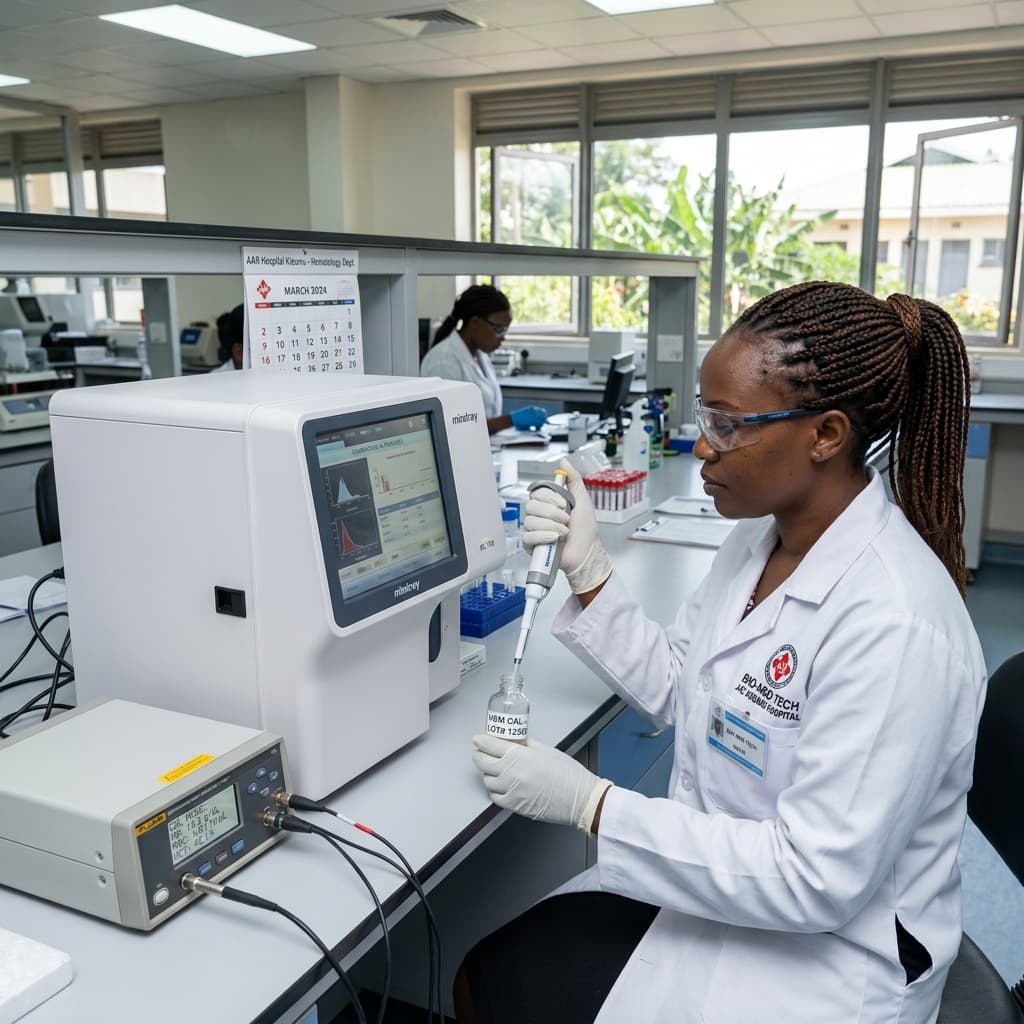
Technical Overview: Click image to expand high-resolution view
In the fast-paced environment of Kenyan hospitals, diagnostic laboratories, and clinics in Nairobi and surrounding regions, clinical decisions rely heavily on measurements generated by medical devices. Whether measuring patient blood pressure, analyzing serum electrolyte levels, or dispensing anesthesia, device accuracy directly impacts patient outcomes.
However, over time, physical wear, component aging, power surges, and environmental factors cause device parameters to drift. Without regular biomedical equipment calibration and quality control (QC) verification, even the most expensive medical devices can deliver inaccurate clinical data.
Calibration is the process of comparing a medical device’s reading against a certified reference standard of known precision. If variations exist between the device output and the reference standard, trained biomedical engineers adjust the device to align strictly with manufacturer and regulatory specifications.
Key equipment requiring routine scheduled calibration includes:
Operating uncalibrated medical machinery exposes healthcare facilities to severe operational and financial risks:
To maintain peak equipment performance and prolong device lifespan, Medwise recommends a structured maintenance lifecycle:
Structured Preventive Maintenance & Calibration Lifecycle
Tier 1 Daily QC Checks & Controls
Tier 2 Monthly Cleaning & Inspection
Tier 3 Semi-Annual NIST Calibration
Tier 4 Annual Comprehensive Overhaul
| Equipment Category | Critical Measurement Parameters | Mandatory Calibration Interval | Standard Reference Tool |
|---|---|---|---|
| Patient Monitors & BP Units | NIBP pressure accuracy (±3 mmHg), SpO2 curve verification | Every 6 – 12 Months | Calibrated Digital Pressure Meter & SpO2 Optical Simulator |
| Clinical Laboratory Centrifuges | Rotational Speed (RPM/RCF), Timer accuracy, Electronic Lid Interlock | Annual (Every 12 Months) | Non-Contact Optical Laser Tachometer |
| Chemistry & Hematology Analyzers | Photometer optical absorbance, pipetting volume, incubator temperature (37.0°C ±0.1°C) | Semi-Annual (Every 6 Months) | NIST Traceable Holmium/Neutral Density Filters & Precision Micro-balance |
| Autoclaves & Steam Sterilizers | Chamber temperature (121°C/134°C), Pressure gauge, Overpressure relief valve | Every 6 – 12 Months | Multi-channel Data Logger & Standard Test Gauge |
| Infusion & Syringe Pumps | Volumetric flow rate (mL/h), Occlusion pressure alarm limit | Annual (Every 12 Months) | Infusion Device Analyzer (IDA) |
At Medwise Technical Consulting, maintenance and precision calibration are at the core of our technical service model. Our biomedical engineers carry specialized testing tools and certified reference standards to deliver on-site calibration, rapid repair response, and documented Quality Control reports.
Don't let device drift compromise your facility's reputation or clinical outcomes.
Discover our Biomedical Maintenance & Calibration Services or call our technical helpline at Contact Medwise Technical Support.
Medwise Technical Consulting provides brand-neutral equipment selection, procurement, installation, and precision calibration across Kenya. Speak directly with our practicing biomedical team today.

Independent advisory. Transparent flat-rate pricing. 100% clinical compliance.