
Back to All Engineering Insights
Laboratory Diagnostics
Published 2026-08-22
•16 min read
Finding the Best Immunoassay Analyzer in Kenya: FIA vs. ELISA vs. CLIA
Authored by Medwise Biomedical Advisory Team
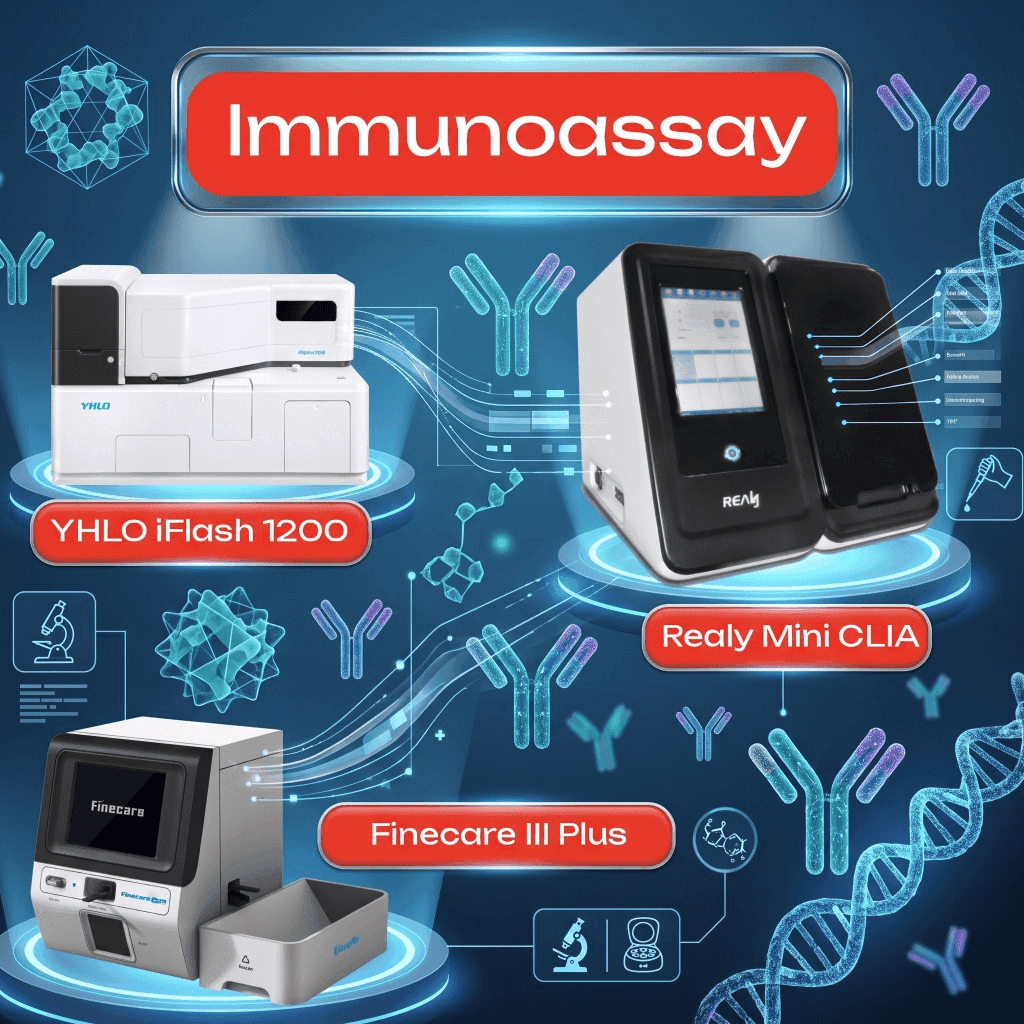
Technical Overview: Click image to expand high-resolution view
Are you opening a new medical laboratory, expanding a diagnostic center, or upgrading your hospital testing facility in Kenya? Selecting the best immunoassay analyzer in Kenya is one of the most pivotal technical and financial decisions you will make.
Your immunoassay technology directly determines your laboratory's turnaround time (TAT), analytical sensitivity, reagent waste margins, and long-term clinical profitability. Whether diagnosing acute myocardial infarction with high-sensitivity troponin, evaluating thyroid dysfunction, screening for infectious hepatitis, or monitoring hormonal fertility profiles, your facility requires equipment tailored to your specific daily patient volume and operational budget.
At Medwise Technical Consulting, we provide independent, brand-neutral biomedical engineering guidance to help medical directors, lab superintendents, and healthcare entrepreneurs procure validated laboratory equipment. Below is a comprehensive engineering and clinical comparison of the three leading immunoassay technologies available in the Kenyan market today: Fluorescence Immunoassay (FIA), Enzyme-Linked Immunosorbent Assay (ELISA), and Chemiluminescence Immunoassay (CLIA).
Technology Overview: Fluorescence Immunoassay (FIA) is a straightforward, rapid point-of-care testing (POCT) methodology. The system utilizes an external excitation light source (such as an LED or UV diode) to illuminate fluorescent dye-conjugated antibodies bound to target biomarkers on a lateral flow or microfluidic strip. An internal optical sensor reads the resulting fluorescent emission intensity to deliver a quantitative or semi-quantitative concentration value.
Fluorescence Immunoassay (FIA) Rapid Detection Workflow
Step 1 Capillary / Venous Sample
Step 2 Fluorophore Reaction
Step 3 Optical LED Excitation
Output 10-Minute STAT Result
FIA functions as a rapid diagnostic screening tool to confirm or rule out acute conditions (such as elevated CRP, cardiac troponin I, D-Dimer, HbA1c, or β-hCG) in under 15 minutes while the patient waits. Best suited for outpatient clinics, maternity nursing homes, upcoming dispensaries, and emergency triage bays.
Popular Brands in Kenya: Wondfo Finecare, Boditech i-Chroma, Getein Biotech, and Realy Tech.
Biomedical Advisory & Engineering StandardEstimated Capital Setup Cost: KES 50,000 – KES 200,000 (Analyzer unit, initial starter test cassettes, and micropipette accessories).
Technology Overview: ELISA is the traditional, gold-standard microplate method that established modern immunological testing. Performed in 96-well polystyrene microtiter plates, the assay relies on enzyme-linked antibodies (such as Horseradish Peroxidase or Alkaline Phosphatase). When a chromogenic substrate is added, an enzymatic color change occurs proportional to the antigen concentration. An optical microplate reader measures absorbance (optical density) at specific wavelengths.
ELISA 96-Well Microplate Batch Processing Architecture
Setup 96-Well Microplate
Binding Sample Incubation
Washing Multi-Cycle Washing
Color Chromogenic Substrate
Reading Photometric Reader
ELISA is built for batch processing economics. It is ideal when a laboratory can aggregate dozens of patient samples (e.g., 40 to 90 samples per run for HIV, Hepatitis B/C, Syphilis, Helicobacter pylori, or autoimmune antibodies) where low cost per well is more important than immediate individual turnaround time. Best suited for university teaching hospitals, blood banks, and reference labs.
Popular Brands in Kenya: EMP (Empsun), Biobase, Rayto, and Awareness Technology (Stat Fax).
Biomedical Advisory & Engineering StandardEstimated Capital Setup Cost: KES 300,000 – KES 700,000 (Semi-automated microplate reader, automated microplate washer, microplate incubator/shaker, and precision multichannel pipettes).
Biomedical Advisory & Engineering Standard[!NOTE] Fully automated ELISA platforms (with robotic liquid handling arms) eliminate manual labor but carry capital costs exceeding KES 2,500,000, at which point modern automated CLIA systems offer superior diagnostic performance.
Chemiluminescence Immunoassay (CLIA) represents the undisputed clinical gold standard in modern medical diagnostics. Instead of relying on external light excitation (like FIA) or enzymatic colorimetry (like ELISA), CLIA triggers a chemical reaction that emits photons in total darkness.
Using ultra-sensitive chemiluminescent labels (such as acridinium ester, isoluminol, or AMPPD) coupled with magnetic microparticle separation, CLIA achieves picogram-level (10⁻¹² g) analytical sensitivity with zero background optical interference.
In the Kenyan medical equipment market, CLIA analyzers are divided into two distinct operational formats:
| Format Option | A) POCT CLIA (Cartridge-Based) | B) Wet CLIA (Bulk Liquid Automation) |
|---|---|---|
| Reagent Packaging | Single-use sealed test pouch (1 patient = 1 cartridge) | High-throughput bulk liquid reagent bottles |
| Reagent Wastage | Zero reagent waste (No open-bottle expiry) | Refrigerated carousel onboard stability (28–42 days) |
| Target Facility Tier | Medium-volume diagnostic clinics, emergency bays & Level 3 labs | Level 4/5 Referral hospitals & high-volume reference hubs |
| Primary Economic Advantage | Lowest startup risk & 100% kit utilization | Lowest Cost Per Test (CPT) on full daily volume |
Complete elimination of reagent waste. With cartridge POCT CLIA, every single-use cartridge contains all required magnetic beads, wash buffers, and substrate. You can run one single patient test today and another next week without degrading remaining kit stock. Ideal for medium-throughput diagnostic centers, specialty endocrine and cardiology clinics, and busy Level 3 hospitals.
Popular Brands in Kenya: Hotgen, Draway (iStar), bioMérieux mini VIDAS (ELFA technology), and Snibe Maglumi POCT.
Biomedical Advisory & Engineering StandardEstimated Capital Setup Cost: KES 800,000 – KES 3,000,000 (Depending on throughput channel count, incubation capacity, and warranty packages).
Massive daily volume handling with maximized profit margins. Continuous robotic sample loading, automated sample barcode scanning, clot detection, automated cuvette disposal, and bidirectional LIS integration. Best suited for high-throughput Level 4 and Level 5 county referral hospitals and regional commercial reference labs.
Popular Brands in Kenya: Mindray (CL-900i, CL-1000i, CL-1200i), YHLO (iFlash 1200 / 1800), Autobio, Snibe Maglumi, and Zybio.
Biomedical Advisory & Engineering StandardEstimated Capital Setup Cost: KES 2,500,000 – KES 7,000,000 (Floor-standing or high-capacity benchtop automated CLIA analyzer, water purification plant, online UPS, and initial commercial reagent packs).
| Feature / Metric | FIA (Fluorescence) | ELISA (96-Well Microplate) | POCT CLIA (Cartridge) | Wet CLIA (High-Throughput) |
|---|---|---|---|---|
| Detection Principle | Optical fluorophore excitation (LED/UV) | Enzymatic chromogenic colorimetry | Chemiluminescence + Magnetic microparticles | Chemiluminescence + Magnetic microparticles |
| Analytical Sensitivity | Nanogram (10⁻⁹ g) | Nanogram to Picogram | Picogram (10⁻¹² g) | Picogram (10⁻¹² g) Ultra-sensitive |
| Typical Turnaround Time | 8 – 15 minutes | 2 – 4 hours (Batch processing) | 12 – 20 minutes | 15 – 30 minutes (First result) |
| Throughput Capacity | 1 – 15 tests / hour | Up to 96 tests / batch | 6 – 30 tests / hour | 120 – 300+ tests / hour |
| Estimated Capital Cost (KES) | KES 50,000 – 200,000 | KES 300,000 – 700,000 | KES 800,000 – 3,000,000 | KES 2,500,000 – 7,000,000 |
| Cost Per Test (CPT) | Moderate | Lowest (Full batch only) | Moderate to Higher per test | Lowest per test (High daily volume) |
| Reagent Wastage Risk | Zero (Single test strips) | High if running small batches | Zero (1 test = 1 cartridge) | Moderate (Open-bottle expiry in low volume) |
| Technologist Labor Load | Very Low (Drop & insert) | High (Manual pipetting & washing) | Very Low (Automated cartridge) | Low (Full walk-away automation) |
| Target Healthcare Tier | Dispensaries, Outpatient Clinics | Blood Banks, Research, Academic Labs | Medium Labs, Specialty Clinics, Level 3 | Level 4/5 Hospitals, Commercial Reference Labs |
| Popular Brands in Kenya | Wondfo Finecare, Boditech i-Chroma | EMP (Empsun), Biobase, Rayto | Hotgen, Draway iStar, mini VIDAS | Mindray, YHLO (iFlash), Autobio, Zybio |
Before procuring an immunoassay analyzer in Kenya, map out your requested test menu. Different technologies specialize in distinct clinical categories:
| Clinical Specialty Panel | Key Biomarkers & Analytes | Recommended Technology in Kenya |
|---|---|---|
| 1. Endocrinology & Thyroid | TSH, Free T3 (FT3), Free T4 (FT4), Total T3/T4, Cortisol | CLIA (Wide dynamic range to detect subtle subclinical thyroid dysfunction) |
| 2. Emergency Cardiology | High-Sensitivity Troponin I (hs-cTnI), NT-proBNP, D-Dimer, CK-MB, Myoglobin | POCT CLIA or Advanced FIA (12–15 minute STAT turnaround at bedside) |
| 3. Fertility & Hormones | β-hCG, LH, FSH, Prolactin, AMH, Progesterone, Testosterone, Estradiol | CLIA (Picogram 10⁻¹² g precision mandatory for reproductive endocrinology) |
| 4. Infectious Serology | HIV 1/2 Ag/Ab Duo, HBsAg, HCV Ab, Syphilis TP, TORCH Panel, Dengue | POCT CLIA/FIA for outpatient clinics; 96-well ELISA for large-scale blood banks |
| 5. Sepsis & Critical Care | Procalcitonin (PCT), Interleukin-6 (IL-6), High-Sensitivity CRP (hs-CRP), SAA | Automated CLIA (Vital for neonatal and ICU sepsis monitoring) |
| 6. Oncology Tumor Markers | Total PSA, Free PSA, CEA, CA-125, CA 15-3, CA 19-9, AFP | CLIA (Low coefficient of variation %CV for oncology follow-up) |
When evaluating an immunoassay machine for purchase in Nairobi, Mombasa, Kisumu, Eldoret, Nakuru, or other Kenyan counties, avoid looking solely at the purchase price. Evaluate these essential biomedical engineering factors:
All in-vitro diagnostic (IVD) devices, reagents, and quality control materials deployed in Kenya must be evaluated and approved by the Kenya Medical Laboratory Technicians and Technologists Board (KMLTTB). Ensure your vendor provides valid regulatory clearance certificates and lot-specific quality documentation.
Immunoassay reagents, magnetic microparticles, and calibrators are thermally sensitive biological products that must be stored between 2°C and 8°C. Partner with distributors that maintain unbroken temperature-controlled cold-chain logistics from port entry in Mombasa to your facility doorstep.
Kenyan power grids frequently experience voltage spikes, brownouts, and frequency surges. Immunoassay analyzers contain sensitive optical photomultiplier tubes (PMTs), high-precision stepper motors, and onboard microcomputers that will suffer catastrophic failure under electrical fluctuations.
High-throughput automated CLIA systems require a continuous supply of deionized clinical laboratory reagent water (CLRW / Type II water) with resistivity > 10 MΩ·cm for probe washing. Factor in the installation of a compatible multi-stage reverse osmosis (RO) deionizer system.
Don't gamble with your laboratory's diagnostic reputation and capital investment. Sourcing an immunoassay analyzer without an objective technical assessment can lead to vendor lock-in, unserviceable breakdowns, expensive reagent supply bottlenecks, and poor clinical utilization.
At Medwise Technical Consulting, our biomedical engineering and laboratory advisory team partners with you from initial feasibility to everyday clinical excellence:
Medwise Technical Consulting provides brand-neutral equipment selection, procurement, installation, and precision calibration across Kenya. Speak directly with our practicing biomedical team today.

Independent advisory. Transparent flat-rate pricing. 100% clinical compliance.