
Back to All Engineering Insights
Laboratory Diagnostics
Published 2026-08-18
•7 min read
Comprehensive Guide to Clinical Chemistry Analyzers & Microfluidic POCT Technology
Authored by Medwise Biomedical Advisory Team
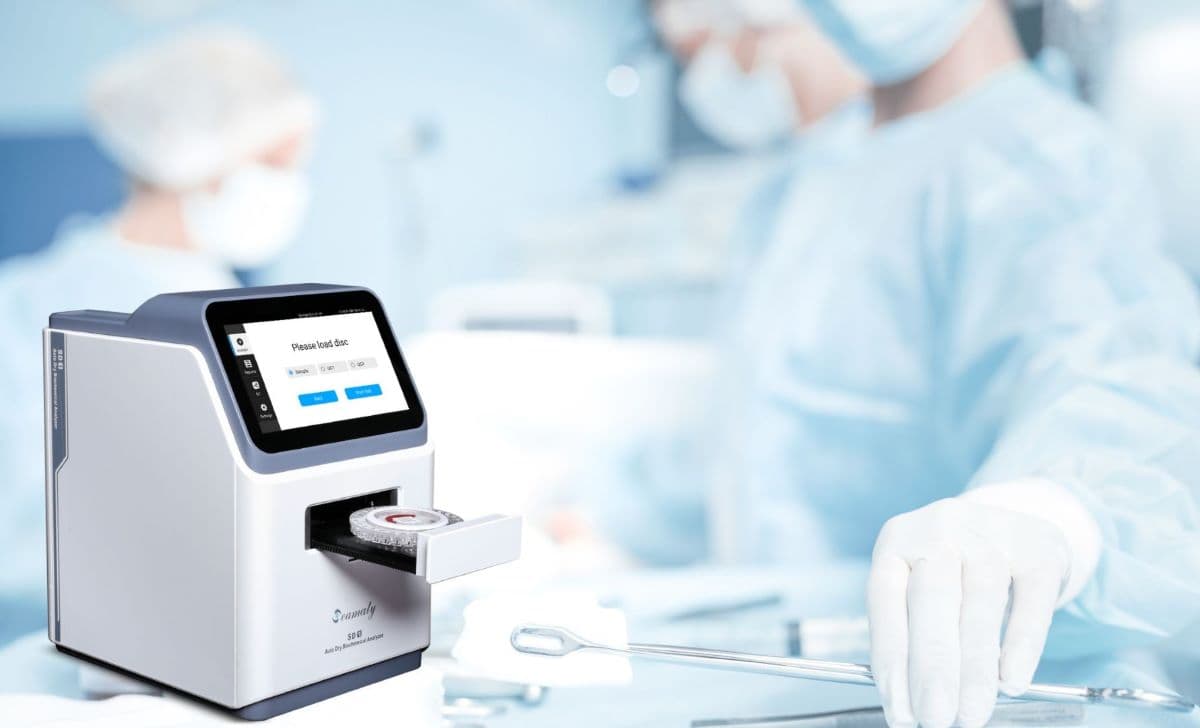
Technical Overview: Click image to expand high-resolution view
Clinical chemistry—often referred to as medical biochemistry testing—is the engine room of modern healthcare diagnostics. By analyzing blood serum, plasma, and body fluids, clinical chemistry tests provide critical quantitative measurements of enzymes, substrates, metabolic waste products, and electrolytes. These parameters allow clinicians to evaluate liver function, renal filtration, cardiac tissue damage, and metabolic homeostasis.
Historically, clinical biochemistry required large, liquid-reagent central laboratory systems requiring skilled liquid handling, daily calibration, and turnaround times of up to 24 hours. Today, the point-of-care testing (POCT) revolution—driven by microfluidic dry chemistry reagent discs and miniaturized Chemiluminescence Immunoassay (CLIA) technology—has transformed biochemistry diagnostics. Clinics and emergency departments across Kenya can now obtain comprehensive lab-grade diagnostic panels in just 12 minutes.
In this technical guide, Medwise Technical Consulting breaks down clinical chemistry principles, panel testing innovations, CLIA vs. FIA immunoassay technologies, and modern automated analyzer platforms.
Biomedical Advisory & Engineering Standard[!NOTE] Source & Technical Acknowledgment: Technical parameters, microfluidic reagent disc principles, and immunoassay comparative data referenced in this article incorporate diagnostic research documentation from the Seamaty POCT Knowledge Base and clinical diagnostic standards.
Clinical chemistry testing measures specific chemical substances in blood serum or plasma to assess organ system integrity:
Detect hepatic tissue damage, inflammation, biliary obstruction, and protein synthesis capacity:
Assess glomerular filtration rate (GFR) and kidney excretory function:
Maintain neuromuscular excitation, osmotic pressure, and fluid balance:
Traditionally, clinical biochemistry required ordering single tests sequentially, consuming large sample volumes and incurring high reagent waste. Microfluidic technology has pioneered the Reagent Disc Panel Revolution:
Microfluidic Centrifugal Dry Chemistry Workflow
Sample Input 0.1cc Whole Blood (100 µL)
Fluidic Routing Centrifugal Microfluidic Disc
Reaction Lyophilized Panel Reagents
Output 12-Min Multi-Parameter Result
In addition to enzymatic chemistry, point-of-care testing increasingly demands high-sensitivity immunoassay detection for cardiac markers (hs-cTnI, CK-MB, NT-proBNP), inflammatory cytokines (IL-6, PCT, CRP), and hormones (TSH, β-hCG).
The choice between Fluorescence Immunoassay (FIA) and Chemiluminescence Immunoassay (CLIA) determines diagnostic precision:
| Feature / Criterion | Fluorescence Immunoassay (FIA) | Chemiluminescence Immunoassay (CLIA) |
|---|---|---|
| Excitation / Light Generation | External light excitation (UV/LED) excites fluorophores | Chemical reaction generates photons in total darkness (No external light source required) |
| Signal-to-Noise Ratio | Moderate (Subject to sample autofluorescence & background light scatter) | Ultra-High (Zero background light interference) |
| Analytical Sensitivity | Nanogram (10⁻⁹ g) level | Picogram (10⁻¹² g) level (100x to 1000x higher sensitivity) |
| Dynamic Range | 10² to 10³ linear range | 10⁵ to 10⁶ wide dynamic range |
| Clinical Application | General screening (CRP, SAA) | High-stakes critical markers (hs-cTnI, Sepsis PCT/IL-6, Thyroid, Fertility) |
Comparative technical data cited from Seamaty Immunoassay & Diagnostic Technical Papers.
When selecting a clinical chemistry analyzer in Kenya, healthcare facilities must match equipment throughput and panel versatility to their daily patient volume:
Deploying clinical chemistry equipment in Kenya requires full compliance with national regulatory mandates:
At Medwise Technical Consulting, we combine biomedical engineering expertise with brand-neutral advisory to help Kenyan healthcare providers select, calibrate, and maintain state-of-the-art laboratory diagnostic equipment.
References & Citations:
Medwise Technical Consulting provides brand-neutral equipment selection, procurement, installation, and precision calibration across Kenya. Speak directly with our practicing biomedical team today.

Independent advisory. Transparent flat-rate pricing. 100% clinical compliance.